
John Tilton & Mary
Conscientious objectors who were jailed for their religious beliefs
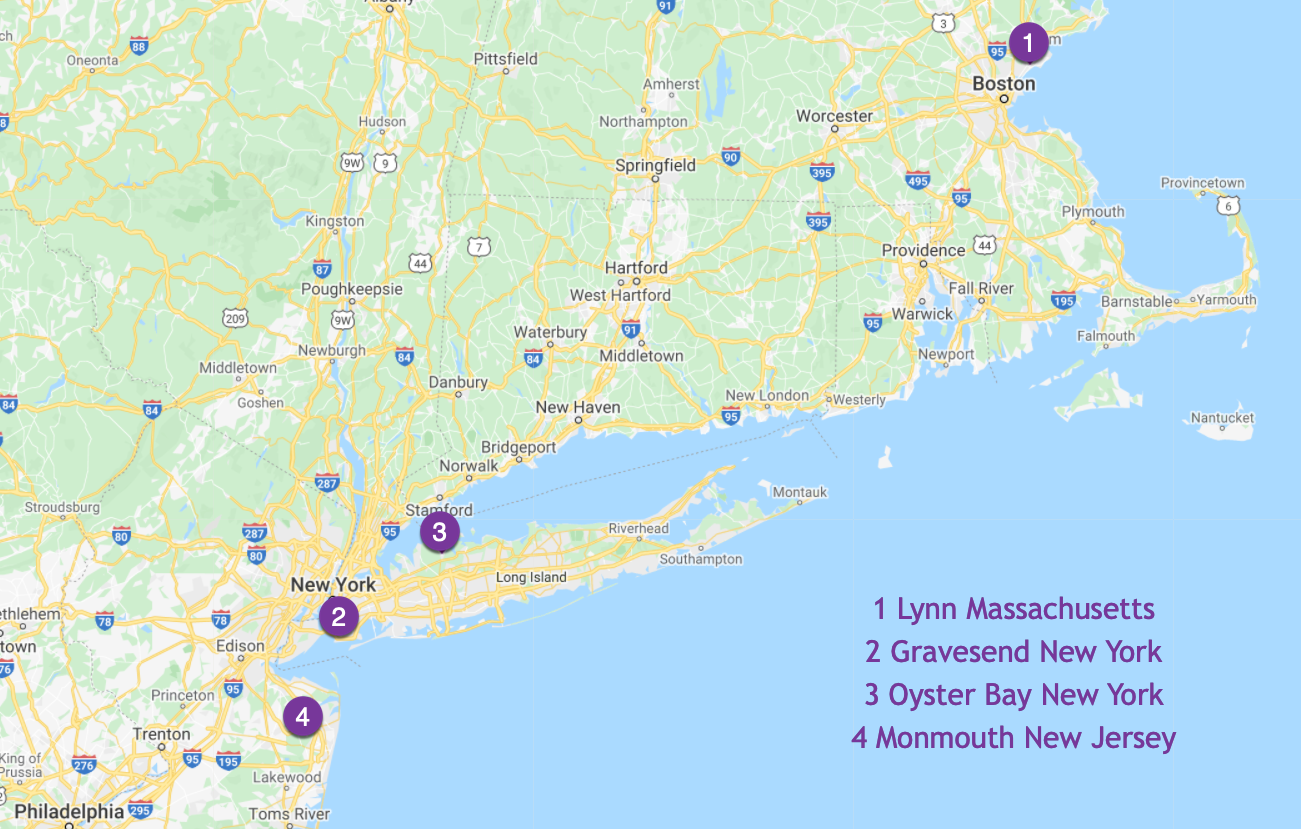
John Tilton was born in Warwickshire, England in 1613. He emigrated to Lynn, Massachusetts before 1640. Mary (possibly Pearsall or Purcell) was born around 1620.
Anabaptists were a religious group that didn’t believe in infant baptism. In Puritan New England and Dutch New York, that amounted to heresy. The family had been living in Massachusetts, but in 1642, Mary and others in the area were accused of “holding that the baptizing of infants was no ordinance of God.” She was guilty of that “crime,” and her family wisely left New England.
The Tiltons and others founded Gravesend, Long Island, New York. John was a leader of the colony, serving as town clerk (or “clark,” as written in his signature), for some 20 years.
The religious freedom of early Gravesend made it a destination for ostracized or controversial groups, such as the Quakers. But it was in Dutch territory, and in 1658, the Tiltons were fined for harboring one of “those abominable impostors, runaways and strolling people”, a Quaker.
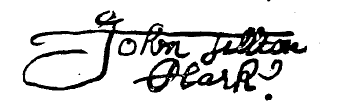
his signature
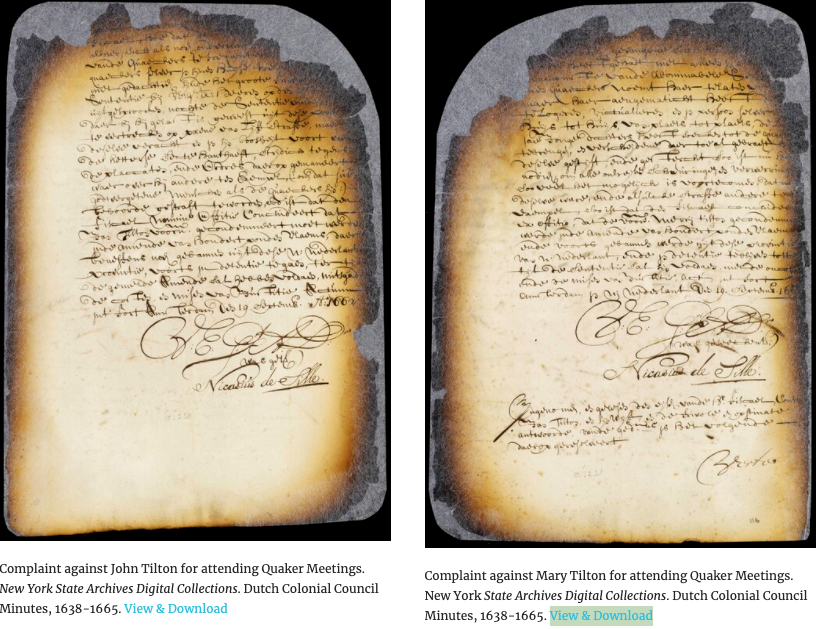
Things got worse. In 1661, the Tiltons were imprisoned for attendance at Quaker meetings. John was sentenced to banishment, but through the influence of his politically connected friend Lady Deborah Moody, he was able to stay.
But not for long. In 1662, husband and wife were again imprisoned, then banished. The sentence was postponed until May 1663, due to the approaching winter. They finally left for Oyster Bay, Long Island, a town outside the Dutch jurisdiction.
Somewhere along the way, John learned at least one Indian language. In 1664 and 1665, he interpreted for the first settlers moving to the Monmouth area of New Jersey, where they peacefully negotiated with Native Americans for land. But he probably never lived there, although his son, our ancestor Peter Tilton, did.
In 1664, New Netherlands fell to the English. Three years later, John and Mary were able to move back to Gravesend, and he was again made Town Clerk.
In 1672, he signed a letter to the Governor of New York, in which he and other Quakers explained their refusal to contribute funds for the repair of a local fort. This is one of the earliest examples of American Quaker war tax resistance.
Mary died in 1683 and John in 1688, both at Gravesend.
TILTONS IN ENGLAND
I have seen trees tracing the Tiltons back into the 1400s, but their sources weren’t listed. I will research this at a later date.
SOURCES
- Colket, Meredith B. Jr. “Founders of Early American Families: Immigrants from Europe 1607-1757” 2nd ed.
- Stillwell, John E., M.D. “Historical and Genealogical Miscellany: Early Settlers of New Jersey and their Descendants” (New York, 1932)
- The Quakers in the American Colonies by Rufus M. Jones 1911
- https://www.bownehouse.org/trials-of-john-bowne/september-19-1662-new-style