
Lambert Van Valkenburg & Annetie Jacobs
Ahnentafel 1388 & 1389
Lambert Van Valkenburg was born in Valkenburg, the Netherlands, in 1614. He married 20-year-old Annetie Jacobs in 1642 in Amsterdam.
The young couple probably arrived in New Amsterdam in the summer or fall of 1643. In 1644, they bought their first house and farm, followed a few years later by a second farm.
In 1652, they moved to Beverwyck, the village at Fort Orange, New York, near Albany. He died before 1697. She died in 1704.
Where They Lived in New Amsterdam
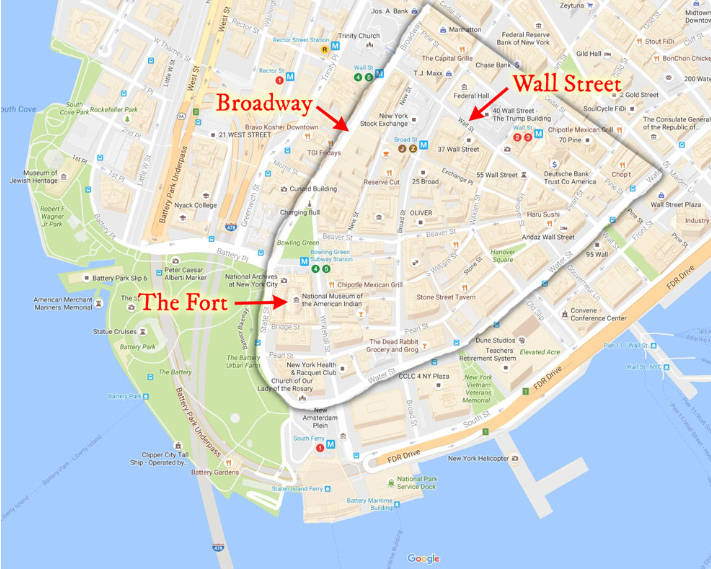
Due to land reclamation, the southern tip of Manhattan today is signficantly larger than it was 400 years ago. The map below outlines the original settlement of New Amsterdam on Manhattan Island. The Van Valkenburgs lived near the fort.
Court Cases
Lambert was mentioned often in Beverwyck’s records. Sometimes, he was involved in lawsuits, and it seems that he frequently lost. But apparently this didn’t affect his reputation. Here are some examples, condensed. Note the different spellings of his name.
- 1657. Lambert van Valckenborch, against Henderick Claessen and Gerrit Willemsen. The plaintiff complains that the defendants beat him and his wife in his own house. The defendants deny it and claim that the plaintiff chased them with a naked rapier out of his house and pursued them to the center of the fort. The court orders the parties respectively to prove their assertions.
- 1657. Pieter Borsboom complains that sitting in front of the guardhouse, where he was lodging by permission, Marten, the mason, asked him what had become of the candles? he answered that he did not know; to which Marten replied: “You have taken them.” Lambert, who was present, says Borsboom then said: “You lie like a rascal and a knave.” Marten then drew his sword and cut Borboom’s head as he rose from his seat.
- 1657. Mr. Van Hamel sued Lambert van Valckenburgh for loss sustained in the sale of a field of wheat whichLambert had purchased at auction, and which had to be resold for nonpayment of purchase money. Judgment for plaintiff with costs and damages of 168 florins, and 30 florins for the brandy and beer consumed at the auction.
- 1660. Lambert van Valckenburch was a petitioner praying that Dutch as well as Indian brokers may be employed to trade with the Indians. The court, after hearing complaints from Indians who had been ill treated by Dutch traders, denied the petition.
The Rattle Watch
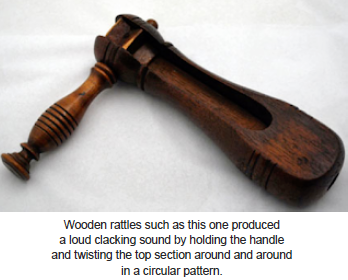
In 1659, Beverwyck created its first night patrol, the Rattle Watch. Lambert was one of the two appointed, to be paid in wampum and beaver skins. The Watchers carried wood noisemakers that when waved, made a loud rattling sound. Their duties were to call out the hour every hour, until 4 AM; if they saw fire, to give warning by rattling and by ringing the church bell; to try to stop any burglaries; and to arrest thieves. The job stayed a long time in the family, passing to Lambert’s son-in-law, then to another son-in-law, then to Lambert’s daughter . She was probably in her 70s at the time. She was paid in cash and candles.
They owned land in Manhattan that today is worth many billions of dollars.
The family owned two large pieces of land in Manhattan.
The first was on the west side of the present Bowery from Canal Street to Broome Street. They apparently lived there until 1647, when Lambert was granted a small lot in the town, near Fort Amsterdam.
The second large lot extended roughly from what is now Lexington Avenue to beyond Fifth Avenue and from Twenty-Ninth to Thirty-Fifth Streets. This includes the land where the the Empire State Building stands today. The family probably never lived there, as it was over two miles outside of town, with few settlers, and far beyond the defensive wall built across the island, now known as Wall Street. They ultimately sold this land to Claes Martensen van Rosenvelt, the ancestor of the Roosevelt clan.
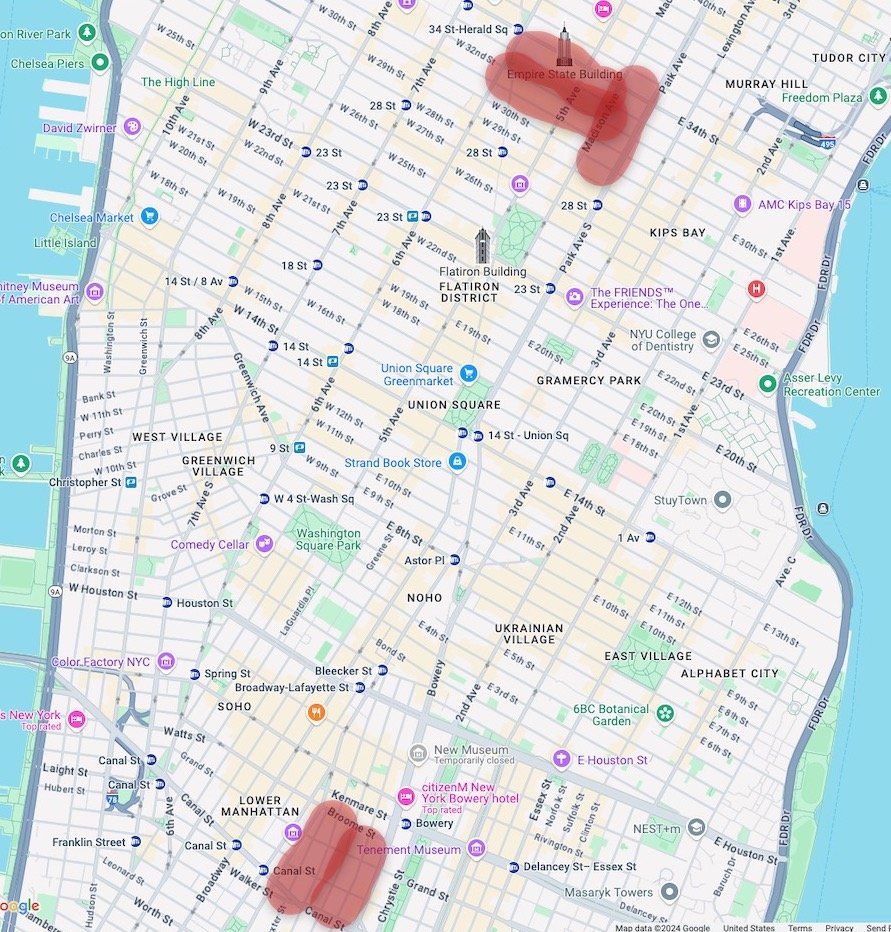
The top map shows the locations of their
farmland on Manhattan Island.
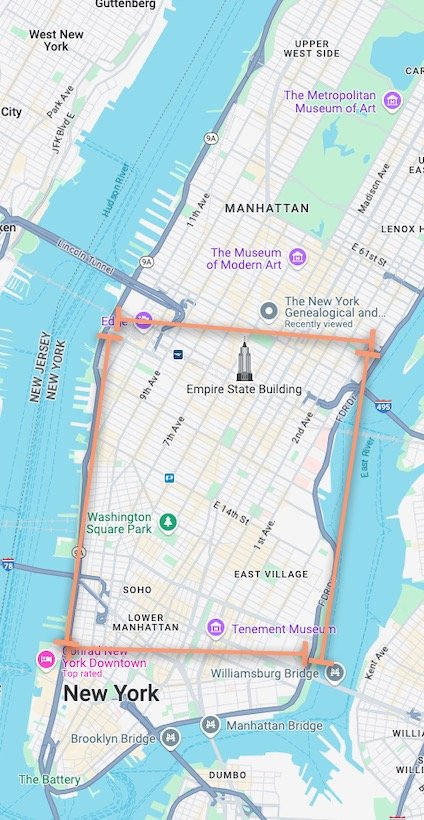
This map shows where in Manhattan the top map came from.
empty
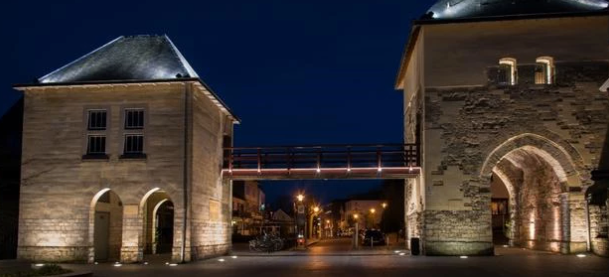
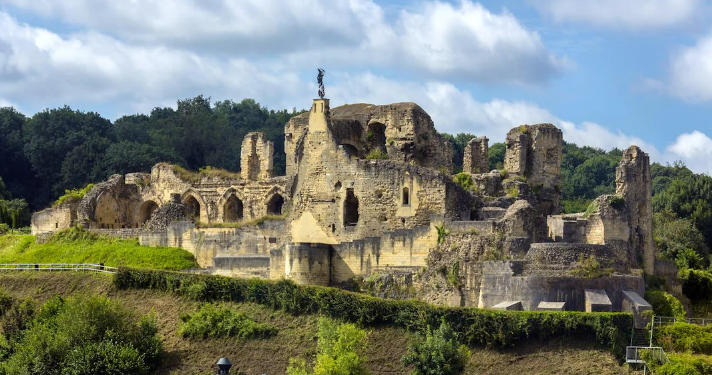
Valkenburg, Netherlands
Van Valkenburg means “from Valkenburg.”
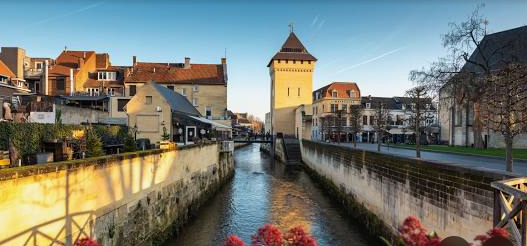
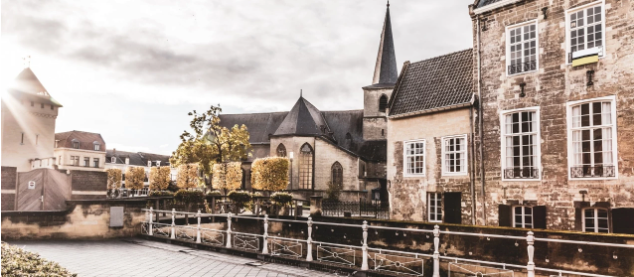
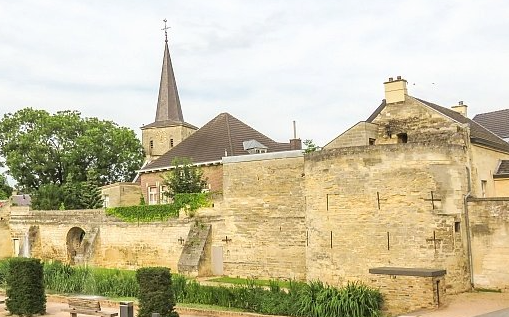
Valkenburg looks different from most other Dutch towns. Instead of houses of red brick, Valkenburg houses are sandy-whitish because they are made with chalk from the local stone quarries. Because of chalk mining, today there is a network of caves which are open for visitors. There were multiple uses for the caves in the 11th and 12th centuries, particularly as escape routes during sieges. Hundreds of years later, the caves sheltered the villagers during World War Two.
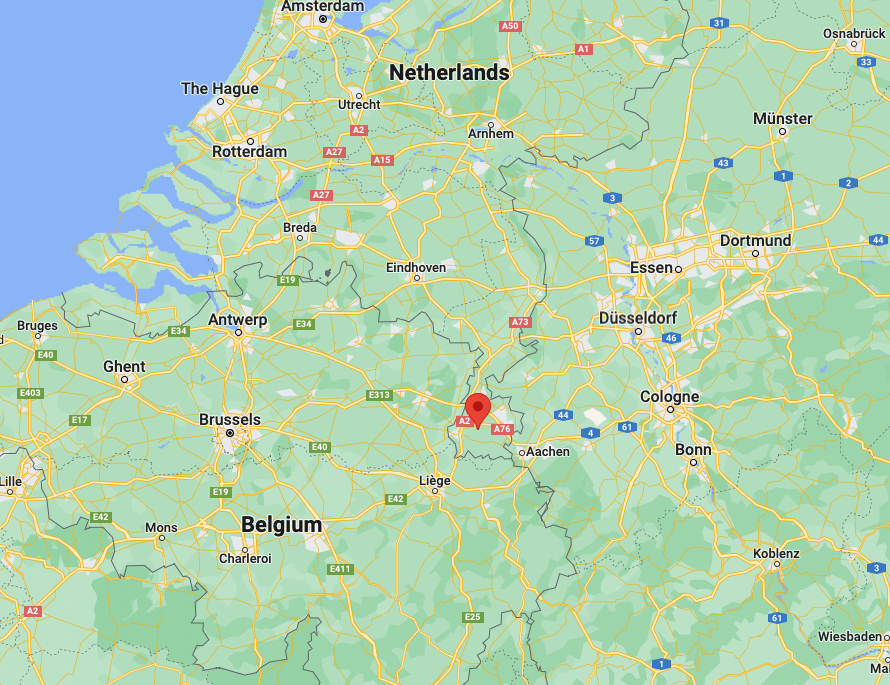
The map below shows the location of Valkenburg, very close to the border of present day Belgium. Much of Belgium was at the time part of the Netherlands.
Photos of Present-Day Valkenburg
Sources
The primary source for the above information is the National Association of the Van Valkenburg Family in America.
Other sources are:
- New York Genealogical & Biographical Record, Vol. 112, Number 2 April 1981, available from the subscription site AmericanAncestors.org.
-
The Van Valkenburg family in America : genealogy of the known descendants of Lambert and Annatje Van Valckenburgh who migrated to New Amsterdam (New York) in 1642-44 by Paul VanValkenburg (This book may be available online from the Internet Archive at archive.org.)